
As told by Zozan Atamian Gamboian and translated by Shirley Markarian Gamboian, December 8, 1988, continued 1994.
Born 1910, Hereran village, Erorin. Died April 1, 1999.
Editor's Note: During the winter of 1914–1915, Talat Pasha, the Minister of the Interior, devised a systematic plan to eliminate the Armenian population of the Ottoman Empire. Coded telegrams were sent to members of the Young Turk Party: “The government has decided to destroy completely all Armenians living in Turkey. An end must be put to their existence however criminal the measures taken may be, and no regard must be paid to either age or sex, nor to conscientious scruples.” On April 24, 1915, in Constantinople (Istanbul), 254 prominent Armenians — lawyers, clergy, writers, professors, and doctors — were arrested, exiled to the wilderness of Anatolia, and killed. The decrees read: “THE MEN SHALL BE TAKEN FIRST.” What follows is the account of one survivor.
Part One: Hereran
My name is Zozan Atamian Gamboian (alias Aghavni Sahagian). I will explain that story later. I was born in 1910 in Erorin (called Eroretzis), Hereran village. Erorin is east of Lake Van at the eastern border of Armenia, close to the Russian border. My mother’s name was Iskoui. My father’s name was Markar. He had 2 older brothers (Armenag and Harry) and one younger brother Badour, who died at an early age.
We had a big house in Hereran. My grandmother and grandfather, Uncle Harry, his wife and children, Uncle Armenag, and his wife and children lived with us. We had cows and lots of chickens. Behind the house were the fields and mountains. The men farmed the land and planted wheat and beans. We had peach, plum, apple, and pear trees. The land was very fertile because we had many cows. Under the fruit trees, they planted cabbage, potatoes and carrots. Everything grew so well because of the rich soil. Four women made the bread. Others made tahnaboor (madzoon soup). This was put into pails with lids. The soup, bread, cooked wheat, and beans were taken to the working men in the fields for their lunch.
We had a dirt floor. A deep pit (tonir) was dug in the floor and that was where they made the thin bread (lavash). This was the oven. In winter, they would kill calves and lambs. They would mix small cubes of beef and lamb, and then cook it. Then they would put it into pots, cover it with cloth, and put it into the ground to store until it was needed.
Weddings were happy times. I remember going to a wedding. My uncle’s 18 year old son was marrying a 15 year old girl. The girl rode a mule to our house. There were lots of veils on her head. They put up a curtain where the ceremony would take place. We all put on henna, made from the henna tree or made from onion skins. My mother was too busy to do my hair so a family friend, Arshag Hovivian, fixed my hair. Everyone wore their best clothes. It was a three day feast with sarma (grape leaves), chicken, and fruit. We’d go up on the flat roof, where it was cool, and sing and dance.
I had a brother Vasken. He died shortly after birth. I don’t remember how he died. Then my sister was born. I was only a child but I remember my mother and father would take me to a brand new school and pick me up later. I went to school with a boy my age. That only lasted 1 or 2 months.
I remember when Uncle Armenag left for America before the fighting started. All the women were crying. My grandparents wanted to move to another village but my father would not leave his land. Maybe we would have survived if we had moved.
Part Two: When the Soldiers Came
My grandmother and grandfather were in the house one day. There was shouting and banging on the door and then the Turks barged in with horses. We were playing outside. My grandfather knew some of these men because they had drunk wine together. These men beat my grandparents to death and put them into the bread oven.
Let me explain that there were no Turks in our village. We only spoke Armenian. Armenians were not allowed to have guns but the men were able to hide some to have for their protection. Whenever there was trouble, the men would escape to the mountains and caves with no food. They knew that if they stayed, the Turks would kill them immediately and they would be of no help to their families. They would hide and come back to their homes when it was safe. So when the incident happened with my grandparents, the men were not there. At night, the men came down from the mountains and buried my grandparents. The next morning, the Turks returned to our house. They knew at once that some men must have buried the bodies so they went up into the hills looking for the Armenian men. They found about 25 – 30 men, beat them, and threw them into the water. A woman dressed as a Turk told us what happened.
I remembered playing outside one day. I was about 5 or 6 years old. I looked up when I heard and saw the Turks on foot and on horses breaking down doors. They broke down our door and killed Uncle Armenag’s two children in our house. My father, Markar, and Uncle Harry escaped to the mountains as soon as they heard the Turkish soldiers enter the village. They hid in the caves with no food or water. My mother had filled a big trunk with our treasures, cloth, clothes, and gold, then buried the trunk in the dirt floor. The Turks prodded the floor with their sticks and guns and took all of our things. All the women and children from the nearby homes were herded to a big house that was close by. They snatched all the pretty children. They were taken to Turkish homes and became servants or were raped. The Turks said they would be returned, but they never were. We screamed as we watched them slit a pregnant woman’s stomach. The baby came out and a soldier twirled the baby on his sword. How can I forget that? We were all so scared and screaming.
An Armenian woman, Aykin, who spoke Turkish, helped us escape to a well where there was underground water at one time. We climbed to the side of the mountain and climbed down the well. We stayed down there for several days with no food or water. We were so thirsty. The men were hiding in caves that had big rocks in front for doors. The men heard the children crying for water from the caves. One man could take the wailing no longer. He left the cave to get water for the babies. The men were afraid the wailing noise would be heard. The Turks were watching when he returned to the cave. They followed him and shot all the men they found. The Turks were looking for us. Some women got out of the well to get water. The Turks knew at once where we were hiding. They came and took us out, one by one, and killed those who resisted. They took us to another big house and gave us one-half of a fish, plus a small piece of bread.
They wanted us to move on and walk to the Armenian district. We screamed and said we wanted to stay, but we had to move on. My uncle’s daughter had a small baby girl. Since there was no food nor water, the baby died. She kept that dead baby with her for many days. It was that girl who looked after me like a mother.
My uncle’s two daughters were taken by the Turks. The only boy with our group was my cousin. They dressed my 12 year old cousin like a girl and my aunt hid him under her full dress. If the Turks saw a boy, they would slit his throat. I remember a beautiful boy, about 15 years old, with blue eyes. I’ll never forget that sight when he was killed. They cut off his head, he teetered headless, and then fell. We screamed and screamed. I’ll never forget that sight.
They took us to a church. We only had our clothes and no food. My sister was held by my mother and I was clutched by her side. My mother told me it was better to die than accept any bread from a Turk. There were only women and children in this old church. The Turks came again and took four more beautiful girls.
The next day, they herded us out of the church. We were on the road again. We screamed to no avail, we had to march on. At night, we reached a Turkish village. The women were browning wheat outside and they gave us each ½ cup. We were starved and hungry but we were thirsty, very thirsty, yet they gave us little or no water. We walked on and stopped somewhere where they beat us again because we could not continue to march in such a weak condition. Again, they took some beautiful girls.
They took us to a field where the Turkish women were threshing wheat. Suddenly, there were gunshots. We realized they were shooting at us from the mountains. Thirty to forty women and children were shot. The Turkish women clubbed those who were not yet dead. They searched those emaciated bodies again and again for anything valuable. My mother was shot and I just fell on her body. My little sister was shot and she fell on top of me. Her bloody hair covered my body. The Turks left and some Armenians came and gathered all those that were still alive. They took us to a small house near a grape vineyard. My father was there when I arrived. When he saw me, he went crazy. He threw a big sheet over me. There was no water to clean me up. There was a well close by, but it was too dangerous to go out and be spotted by the Turks. The blood dried. My father was so sad because he had to leave me again. The men had to hide again in the mountains. The women and children stayed.
Again, the Turks came and told us it was time to march on. We didn’t believe they were taking us to Armenians. We were so tired we could not walk. If you couldn’t walk, the Turks would hit you, women or child, on the head with their rifles and toss you in the river which was close by. It must have been April or May because there was green grass. We were starved and tried to get grass to eat but the Turks wouldn’t let us leave the marching group. They would stop and kill those who tried and leave their bodies along the way. They gave us a handful of fried grain again, but they would not give us water.
We stopped at a Turkish house. I remember the Armenian children played under the porch. The Turks were above us and eating almonds and walnuts and tossing the shells below them. The children were starved of course, so 3 or 4 of them started to eat the shells. The sharp nut shells cut their throats and they died. My cousin, Nano, would not let me eat the shells. Everyone was always starved. Mothers cried and cried. The Turks were laughing.
Part Three: The Bridge
We came to a bridge – one side the Turks and one side the Armenians. We were too scared to cross the bridge. We couldn’t trust the Turks that the Armenians were on the other side of the bridge. They threatened to throw us in the river. They turned us over to the Armenians with a letter from the Pasha, which stated we were now the responsibility of the Armenian soldiers. They counted us as we walked over the bridge – one by one. We were so happy to know we were safe. There were only 25 of us left. The rest had died. We had lost everyone.
The Armenians took us to a house and gave us cans of meat and raisins to eat. My cousin took it from my hands and gave me only a little to eat because our stomachs were not used to food. In a month, we were lucky if we had a piece of bread. Some people ate too much and they died. We stayed there for awhile and then we all left to an open field that had a wall separating us from a field of planted potatoes and cabbage. Some went out at night to the farm and stole some big potatoes and we lived on that. We made a big fire and roasted the potatoes. The farm was owned by Armenians, but they did not know we were there.
My cousin Nano said it rained hard for 3 days. There was nowhere for us to go for shelter – only one tree, just sat in the rain. There was water everywhere. I don’t remember the rain but my cousin told me later. We were wet, hungry, thirsty, and with nowhere to go. Finally the sun came out and dried everything.
One day an Armenian man came and wanted me to go and live with him and his daughter. My cousin encouraged me to go because it would be a better life than what we had. I went to his house. It was a very nice, rich house. I remember they made piles of thin bread (lavash) and we put it outside to dry. Then the daughter and I went outside to play. They liked me and I liked them. I stayed there a couple of months. Then it happened again – the shouting, shooting, fighting. The Turks were there. Everyone was scared and people in the village were being killed. The man and woman said they could no longer keep me because they had to move on to another village. I cried and cried. What can I do? Where could I go? I was by myself. I walked behind the family. Then somehow, I lost them. I walked by myself – no one was around. I was walking in a field. A man on a horse saw me and took me to a village where I found my cousin’s neighbors. They gave me some potatoes to eat. We located my cousin Nano and we were happy to be together again.
Part Four: The Orphanage
The man on the horse said he’d take me and anyone to an Armenian orphanage. My cousin Nano wanted me to go. I begged my cousin’s wife to come too but she said since she was older and married, they would not accept her. Her sister Arous (who was single) and I were to go. She said she would come and visit us. She made a dress for me out of potato sacks. Nano said he would come to the orphanage and see me and Arous.
We were taken to a big house which was the orphanage in Leninakan (Russia). There was a big room with cots. Whoever robbed or was bad was stripped naked and beaten, almost to death. There were 4 floors in that building. For breakfast, we ate bread dipped in syrup. For lunch, a piece of bread and some cabbage soup (if available) at night. The Turks had taken all the crops from the orphanage. The Turks were close by and at night they’d barge through the doors and take the beautiful girls. There was only one Armenian woman in charge and there was nothing she could do to the Turks. There was school, but the Turks always disrupted the day.
Uncle Harry, in America, had learned from Nano that I was in this orphanage. He wrote a letter to his sister. She was very poor. She had a son Michael, but no husband. I left the orphanage and went with Michael to his house. I wasn’t afraid because I knew they were Armenians. When I got to his house, my father’s sister was there (Michael’s mother). I remembered her because she came to our house. Uncle Harry sent money to her so she could look after me. I never saw any of that money. They kept it.
They sent me to school a few blocks away. It was a high school. I told my cousin I could not go because I had no schooling. I refused to go. I had no elementary education because I lived during the massacres. The neighbors who knew my parents wanted me to go to school. I was afraid that if I went to school, my cousin would not keep me. I stayed home and did housework.
They decided it was time for me to learn how to make bread. I’d go to the well with 2 pails and fill them. People got up early in the morning to stand in line to get water from the outdoor faucet. It was hard work. I’d get up very early, around 6 am. We needed 50 pails of water to make bread dough and we all made the dough. Made lots of bread and sold it. People who were on their way to work would buy it. I stayed about 5 years.
Part Five: Coming to America
I lived with my Aunt Arous and cousin Nano for about 5 years until my papers came in from Uncle Harry. He was having a problem bringing me to America because I was not his child. So he offered his friend Ohannes Sahagian $200 to bring me over as his daughter Aghavni (Altoon and Nancy Sarkees’ sister), who had died in Armenia. Only immediate family could immigrate.
My aunt took me to a store and bought me a heavy black coat for my trip. I did not wear it. It was ugly, but it had nice fur. I remember it cost 130. I didn’t even have a dress. My neighbor made one for me. I brought the coat with me. My cousin told me to be quiet and not say anything about the clothes, otherwise I would not go.
We went to a hotel where we stayed for one week. Men and women slept in the same room. We were waiting for the ship, which would take me to America. They gave us lentil soup. We were happy to have soup like we had in Armenia. I remember an old lady who sat beside me. She took out her false teeth and put them on the table. Everyone had looked at her and laughed hysterically.
I finally boarded the ship. I was on the 2nd floor with a small room and sink. My cousin told someone to look after me. There was an old woman on the bottom bunk. For 7 days, I was sea sick. I could not eat. One day, they gave me some black grapes. I was only able to eat 4 grapes. Later I felt worse. I was scared to take the pills they wanted me to take. Four people held my arms and legs and forced me to swallow the pills. I was near death. They saved my life.
Then there was a smell from my suitcase so I threw my suitcase and the food, cheese, garlic, and bread into the sea. A nurse took me to the 4th floor. An Armenian woman befriended me since I could not eat nor talk. She brought me tea and crackers. I felt better and went back to my beautiful room. I was afraid to leave the room and get lost if I went to the bathroom. I didn’t know what a bathroom was. I didn’t go for 7 days. I lost weight and was down to 100 lbs. I was so scared.
Finally, we arrived in New York and saw the beautiful Statue of Liberty. An Armenian man looked at my papers. Lots of nurses were there to help the sick and the elderly, while they were processing their papers. I’ll never forget how a nurse took me to the train and took care of all the people. They would take them by the arm, walk with them. The room was so crowded. I thought they were so kind, like my people in Armenia. A nurse stayed with me on the train until I got to Niagara Falls. On the train, my eye got swollen, but it broke when I got to Niagara Falls. The train pulled into the Niagara Falls train station at 3rd and Falls St. Uncle Harry and Mr. Sahagian were waiting for me. The nurse said good-bye and left on the train. I kissed Uncle Harry. I remembered him from the old country.
Back at the train station, I was so happy to see my relative and hugged and kissed him! Mr. Sahag Sahagian I did not know. I shook hands with him and he asked why I did not kiss him. I said Harry was my uncle and he saved my life. We all laughed and we went to Mr. Sahagian’s. I spent 6 weeks with them on lower 12th St.
Part Six: Niagara Falls
It was 1930. I was 20 years old when I came to this country. I couldn’t work. I did not know the language. I had no one.
They brought Arshag over to meet me. He was from my village and he said he used to come and water the crops behind the house. He had a wife and children, but they were all killed by the Turks. He never talked about the old country, nor told me about his previous marriage. He was 38 years old and I was 20. Arshag was a jealous man. I thought he was too old and I said I would not marry him. Arshag said, “Why – are you going to marry one of the other men?” All the men that were here from my village were old too. I had no choice. I had to marry him. Someone said not to marry him. But I had no choice, no money, no one. So, I agreed.
We got married May 18, 1930. I had a beautiful wedding. Arshag was a jealous man and told me not to dance. He danced and everyone did but I was not allowed. The reception was at Old Veteran’s Hall on East Falls and 12th St. There was a big, long room upstairs. There was a coffee shop downstairs. We had a big dinner. There were a lot of nuts, raisins, and oranges from Mr. Toorigian’s grocery store. Arshag bought bushels of oranges. Mr. Michael Aloian said oranges were not suitable at a wedding, but Arshag insisted because he wanted a lot of food.
My wedding dress belonged to Alice Hatchigian. An Italian woman, Mamie, gave her a veil to wear. It was too long, but there was no time to cut it. We were married at St. Peter’s Church. We went to a beautiful hotel in Buffalo and spent 3 days. After the third day he said, “Let’s go — this place is too expensive.”
We lived on 13th St. next to Thirteen Street School. We lived on the 3rd floor. There was a big, long kitchen. Mr. Michael Aloian bought us a big couch for $250. The kitchen table and chairs were a gift from a friend. Someone bought us an icebox, but I can’t remember who. We only had 2 rooms. It was an expanded attic and it was a very low ceiling. I had 2 children there – David and Lollie.
Zozan Atamian Gamboian died on April 1, 1999. April Fool’s Day was always a favorite holiday for her. She had the last laugh.
She is survived by her daughter Lollie (Lolozar), her grandson Jeff, and the generations that follow.
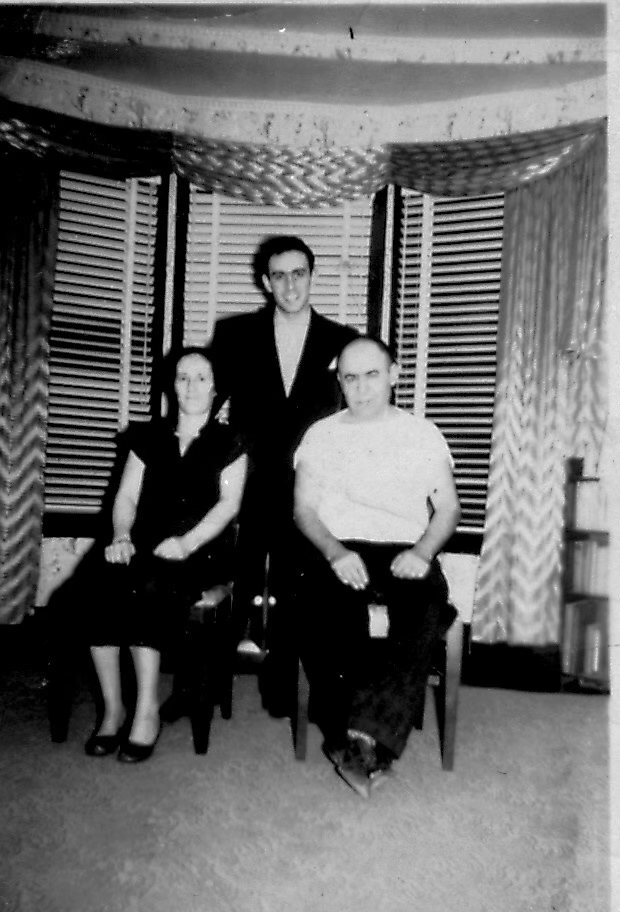
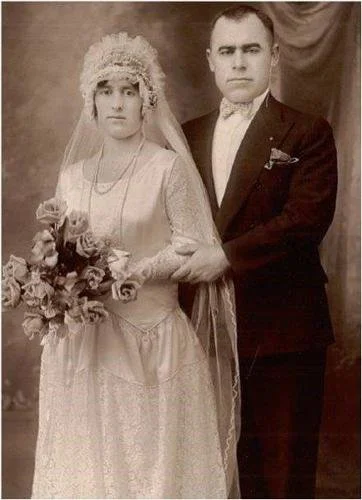
Zozan and Arshag Gamboian.
CREATIVITY
EXPERTISE